Ending your workday with tired eyes or squinting at road signs are familiar signs you need an eye check-up. But for many Kenyans, the real challenge isn’t knowing you need help—it’s figuring out who to see. Should it be an optician, an optometrist, or an ‘eye doctor’? This guide clarifies these roles, explains what a quality eye exam involves, and helps you find a trustworthy professional without overpaying.
Optician, Optometrist, Ophthalmologist: Who Should You Actually See in Kenya?
In Kenya, the terms ‘optician’ and ‘optometrist’ are often mixed up, but their roles are distinct and crucial for your eye health. Here’s a simple breakdown:
● Optometrist: Your primary eye care professional. They perform comprehensive eye exams to test your vision and health, then issue a prescription for glasses or contact lenses.
● Optician: A trained technician. They use the optometrist’s prescription to help you choose frames, take measurements, and then fit, dispense, and repair your eyeglasses.
● Ophthalmologist: A medical doctor and surgeon who diagnoses and treats eye diseases like glaucoma or cataracts and performs eye surgery.
For a routine check-up and a prescription, an Optometrist is the correct specialist to see. They are the starting point for clear vision. To ensure quality care, look for professionals registered with the Kenya Optometrists Association.
What a Proper Eye Exam Should Involve (It’s More Than Just Reading Letters)
Stepping into an optometrist’s room, you probably expect to read letters off a chart. While that’s part of it, a thorough exam begins with a conversation about your daily life and any eye strain you feel. Next comes the refraction, the familiar ‘which is better, one or two?’ test. This is how the optometrist pinpoints the exact focusing power your eyes need to see clearly, whether you’re driving a matatu or reading your phone.
A comprehensive exam also protects your long-term health. Your optometrist will check the pressure inside your eyes, often with a gentle puff of air or a small device. This quick, painless test is crucial for screening for conditions like glaucoma, which can cause vision loss without any early symptoms. It is a vital health check, not just a test for glasses.
Finally, you’ll receive your prescription—the set of numbers needed to make your glasses. The ‘Sphere’ (SPH) number corrects basic focus, while a ‘Cylinder’ (CYL) number fixes blurriness from an unevenly shaped eye (astigmatism). These numbers are the precise instructions the optician will use to create perfectly tailored lenses.
Decoding the Costs: How Much Should an Eye Exam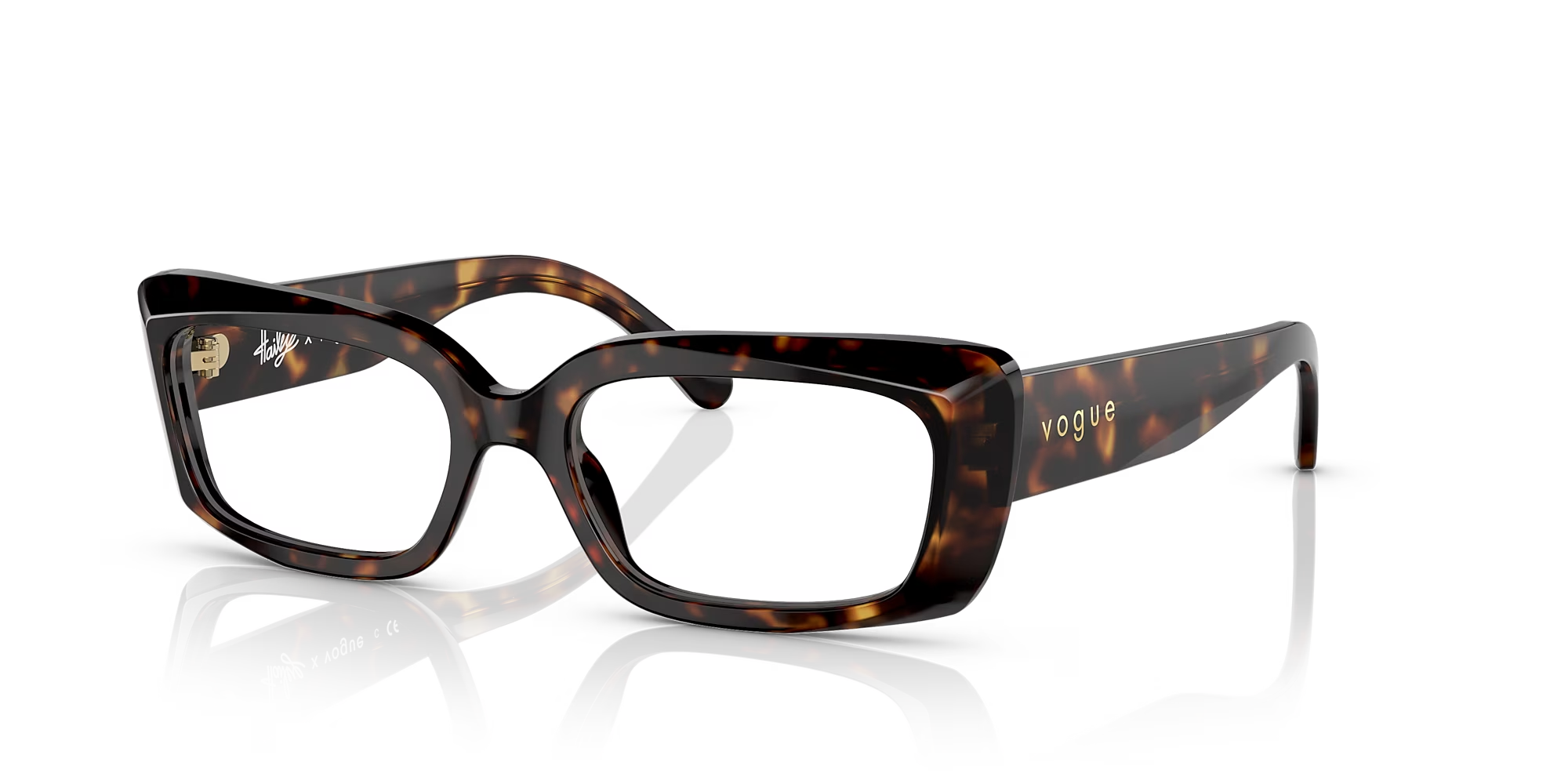
and Glasses Cost in Kenya?
The cost of an eye exam in Kenya typically ranges from Ksh 1,000 to Ksh 3,000 at a reputable clinic. This fee covers the optometrist’s expertise and professional equipment to ensure your prescription is accurate and your eye health is checked thoroughly. Think of it as a small investment to protect your eyesight.
For the glasses, the total cost combines the frames and the lenses. You can find affordable glasses in Kenya with basic, durable frames starting from Ksh 1,500. The price increases with designer brands or stronger, lighter materials. Similarly, basic lenses are included, but special coatings—like anti-glare for night driving or blue-light filtering for computer work—will add to the final cost.
Many people wonder if SHA can help. Generally, the standard SHA package does not cover routine eye exams or the cost of glasses. Confirm the details of your specific cover directly with your provider, but plan for these expenses to be paid out-of-pocket at most optical shops.
How to Choose Spectacle Frames for Your Face, Lifestyle, and Prescription
Finding the perfect frame is about more than just style. A simple trick is to create contrast: rounder faces often suit angular frames, while more square faces are softened by curved ones. A good fit means the frames are no wider than your face and rest just below your eyebrows, ensuring they feel as good as they look.
Your daily life is also a key factor. If you need glasses for computer use in an office, a lightweight, professional frame offers all-day comfort. For more active work, like a boda boda rider or a farmer, you’ll need durable, flexible frames that can stay put and resist damage. Think about your typical day before you decide.
Finally, your prescription plays a role. A very strong prescription often means thicker, heavier lenses, so your optician will guide you toward smaller, sturdier frames that can support them properly. This ensures your vision stays clear and the glasses remain comfortable.

Anti-Glare, Blue Light, Transitions: Are Special Lenses Really Worth the Money?
Beyond the basic prescription, special lens coatings are designed to solve real-world problems. An anti-glare coating, for example, is essential for anyone who drives at night. It reduces the blinding glare from oncoming headlights and streetlights, making your journey significantly safer and more comfortable.
If you spend your days in front of a laptop or phone, ask about blue-light filtering lenses. They are specifically designed to reduce digital eye strain and fatigue, making them a smart addition to reading glasses for computer use. For office workers and students, this can mean fewer end-of-day headaches.
For ultimate convenience, consider photochromic lenses (like Transitions) that automatically darken in the sun and become clear indoors. This two-in-one solution is a key benefit when weighing contact lenses vs glasses pros and cons. Your optician can help you decide which upgrades best fit your lifestyle.
Your 5-Step Checklist for Finding a Trusted Eye Doctor in Kenya
You are now equipped to confidently find the right eye care in Kenya, protecting both your vision and your wallet.
Here is your five-step roadmap to clear vision:
- Start with an Optometrist for your eye exam.
- Verify their Optometrists Association of Kenya (OAK) certification.
- Clarify what the exam fee includes before you begin.
- Discuss your daily life with the Optician to get the right lenses.
- Confirm warranties and free adjustments—a true sign of quality service.
Navigating your eye health is no longer a challenge; it’s an empowered choice.