Common eye problems for kids in Kenya symptoms and solutions
Every parent wants their child to succeed in school and build a bright future. But what if the reason a child is struggling to read is not a lack of effort, but simply that they cannot see the words clearly? Often, the biggest barriers to a child’s learning are the ones we cannot easily see.
Think of a young boy named Juma. His teacher might believe he is a slow learner because he never copies from the blackboard, but the truth is simpler: the letters are a blur. Juma isn’t being difficult; he just needs help to see the world around him. According to eye doctors, many children who are thought to have learning difficulties are actually struggling with an undiagnosed vision problem.
Have you ever wondered if there’s a simple reason why your child often gets headaches, seems clumsy, or frequently rubs their eyes? These are common signs of vision problems in toddlers and school-age children that are very easy to mistake for something else. Protecting your child’s eye health starts with knowing these subtle clues.
Fortunately, many of these issues are easy to fix when they are found early. This guide covers the most common eye problems for kids in Kenya, from simple redness to trouble seeing far away. You will learn the warning signs to look for and the simple, affordable steps you can take to protect your child’s precious gift of sight.
“Apollo” or Red Eye: When to Worry and What You Can Do at Home
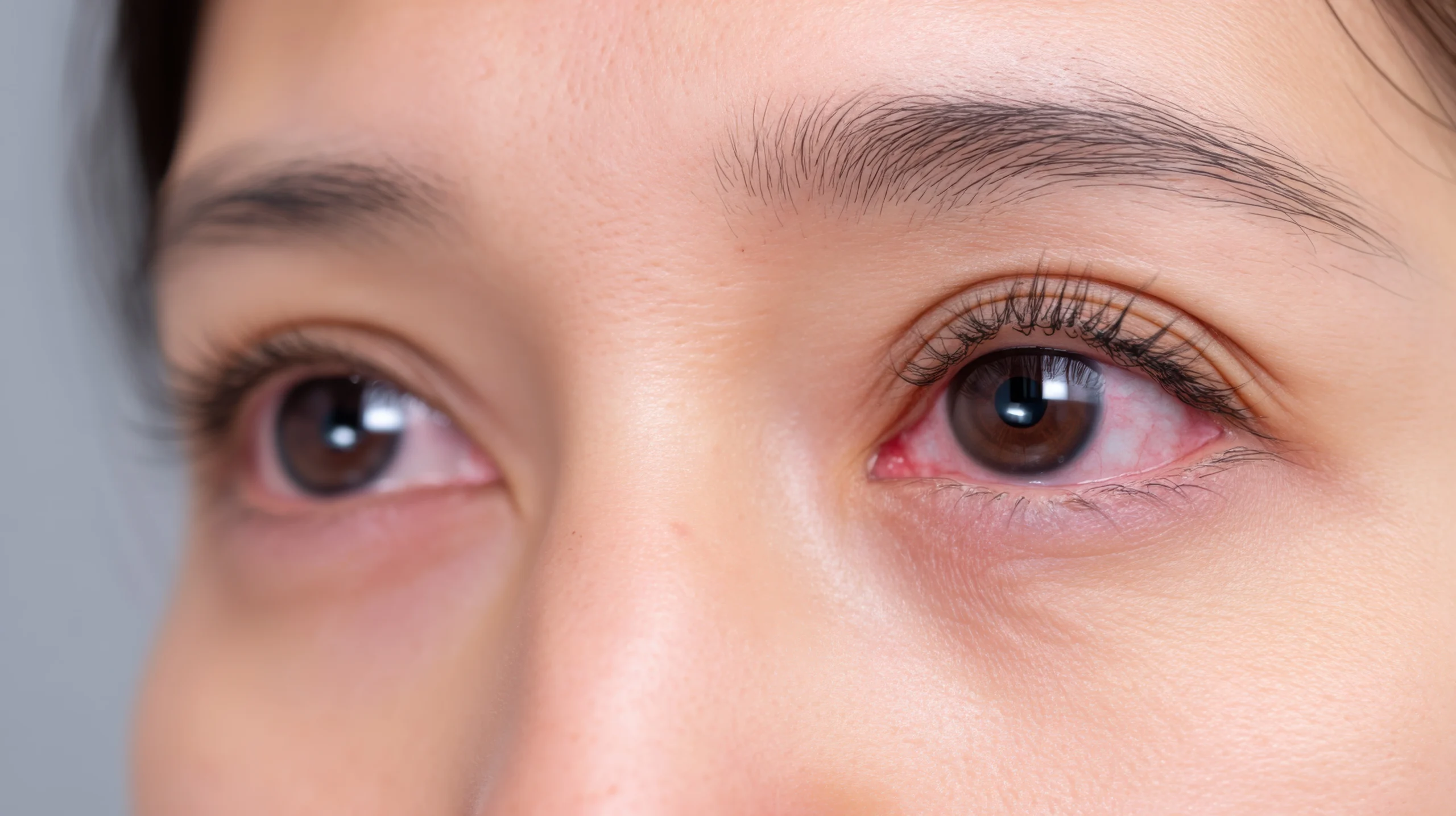
Waking up to find your child’s eye is red, swollen, and weepy can be worrying. This condition, often called “Apollo” or red eye, is very common. However, it is crucial to know that not all red eyes are the same. Some are simple irritations, while others are infections that need medical attention to protect your child’s sight.
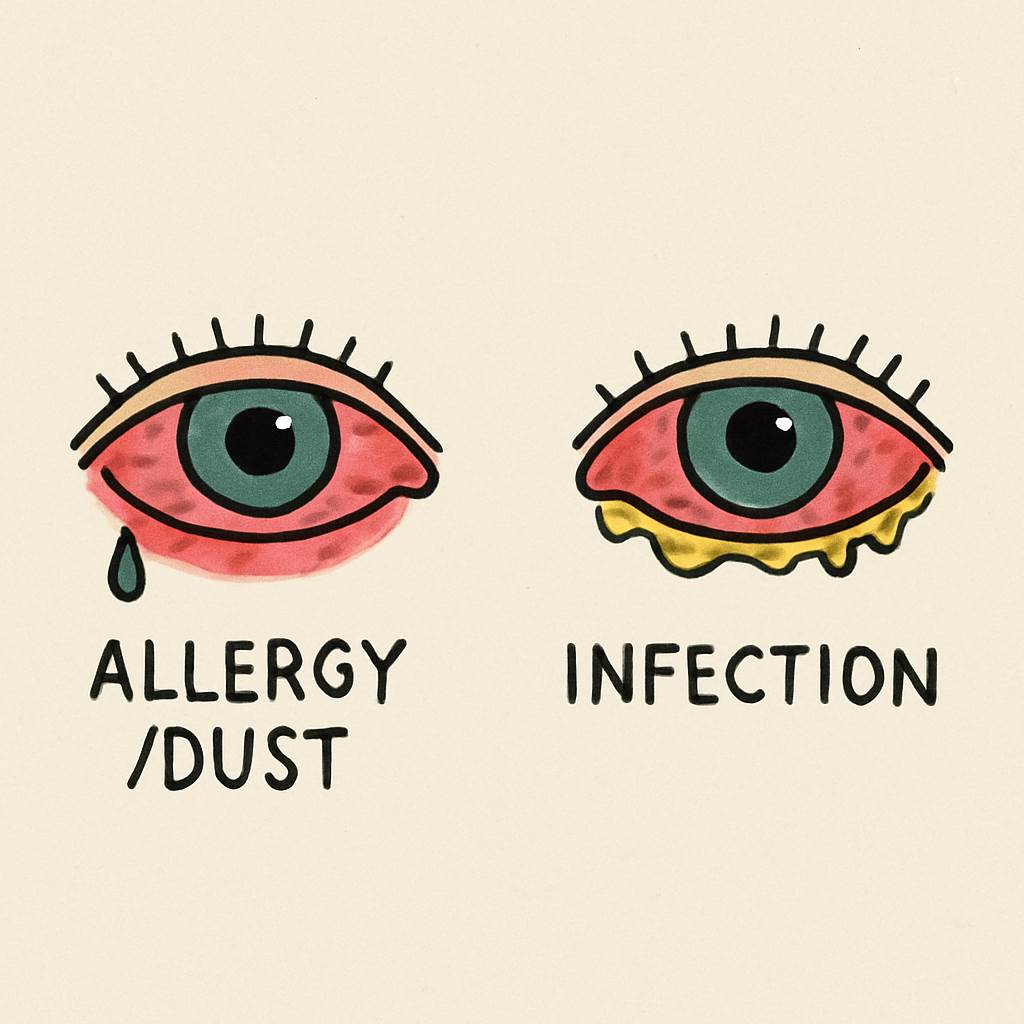
Look closely at what is coming from the eye. If the eye is just watery and itchy, it is likely an allergy caused by something like dust during the dry season or pollen from plants. This is the body’s reaction to an irritant. But if you see thick, yellow, or green discharge (pus) that makes the eyelashes sticky or crusts the eye shut after a nap, it is a sign of an infection caused by germs. These germs can spread easily from one eye to the other, and to other children, especially in schools.
For a simple, watery irritation, you can provide relief at home. First, wash your hands thoroughly. Then, take a clean piece of cloth or cotton wool, dip it in cool, clean water, and gently wipe your child’s eye. Always wipe from the inside corner (near the nose) towards the outside. This prevents germs from being pushed back into the eye. Use a fresh part of the cloth for each wipe. This simple cleaning can also help with the sticky eyes many newborns experience.
The most important sign to watch for is that thick, colored pus. While a watery, itchy eye from dust often gets better on its own, an eye with pus will not. This is a clear signal that an infection is present and you need to take your child to a clinic or health worker. They can provide the right medicine to fight the infection and prevent any long-term damage to your child’s precious vision.
Why Your Child Squints at the Blackboard: A Guide to Clear Vision
Has a teacher mentioned that your child struggles to see the blackboard? Or perhaps you’ve noticed they sit very close to the television? These are not signs of a lazy child; they are often the first clues that your child has trouble seeing clearly. This is a very common issue, and it is not their fault. It simply means their eyes have a little difficulty focusing, much like a camera that cannot get a sharp picture.
This focusing problem can happen in two main ways. For some children, things far away are blurry, which is why they squint to see across the road or read from the back of the classroom. This is called nearsightedness. For other children, it’s the things up close that cause a problem. They might complain that their eyes feel tired or that their head hurts after reading a book for a short time. This is called farsightedness.
Pay attention to these small but important signs. A child who often rubs their eyes, complains of regular headaches, or avoids reading and schoolwork might be struggling with eye strain. They are working much harder than other children just to make the words clear. This constant effort is tiring and can make it very difficult for them to learn and enjoy school.
If an eye clinic finds that your child needs glasses, it is a wonderful solution. Glasses are not a sign of weakness; they are a tool that can immediately help your child see the world clearly. Just as a good pen helps a student write better, glasses help a student learn better. By giving them clear vision, you are giving them a better chance to succeed in school and in life.
The Hidden Danger of Dust and Flies: Protecting Your Family from Trachoma
While some eye problems affect how clearly a child sees, others are dangerous infections that can damage the eye itself. You may have seen a child with red, watery, or sticky eyes and thought it was just “Apollo” (pink eye). However, one of the most serious eye infections affecting children in Kenya, called Trachoma, starts this way but can lead to permanent blindness. This infection is not just a simple irritation; it is caused by germs that are easily spread by flies, and on hands and clothes that have touched an infected person’s eyes.
What makes Trachoma so dangerous is what happens over time. Repeated infections, especially in children, cause scars to form on the inside of the eyelid. As these scars tighten, they pull the eyelashes inward so that they point toward the eye. With every blink, the sharp eyelashes scratch the surface of the eye, causing constant pain and slowly creating cloudy scars that block vision. This is a terrible, painful process that can be prevented.
Protecting your family from this disease is possible with simple, daily habits. Keeping your children’s eyes safe from Trachoma is a key part of children’s eye health. The most important steps are:
- Soap and Water: Wash your children’s faces and hands with soap and clean water every single day to remove the germs that cause infection.
- Fly Control: Keep flies away from your home, your food, and your children’s faces. Covering food and keeping rubbish pits closed can make a big difference.
By keeping eyes clean on the outside, we prevent these dangerous germs from ever causing harm.
“Eat Your Sukuma!”—How Local Foods Build Strong Eyesight
Just as we protect our children’s eyes from germs on the outside, we can also build them to be strong from the inside. The food our children eat plays a huge role in their eye health, and fortunately, many of the best foods for vision are grown right here in Kenya. This simple, daily act of providing a healthy meal is one of the most powerful tools in any children’s eye health and nutrition guide.
One of the most important nutrients for sight is Vitamin A. Think of it as the special fuel that helps our eyes adjust and see clearly in dim light, like at sunset or inside a poorly lit room. When a child does not get enough Vitamin A, they can develop a problem called night blindness, one of the key vitamin A deficiency eye symptoms. This makes seeing in the dark very difficult and can be a sign of a serious nutritional gap.
You can find this vital nutrient in many of our common, colorful foods. Dark green leafy vegetables like sukuma wiki and terere (amaranth greens), bright orange fruits like mangoes and pawpaws, and orange-fleshed sweet potatoes are all packed with Vitamin A. Adding these to your family’s meals is a delicious and affordable way to protect your child’s vision, which is a major concern when thinking about common eye problems for kids in Kenya.
Feeding your child a healthy mix of these local vegetables and fruits is a powerful way to prevent certain vision problems before they even start. A good diet is a cornerstone of protecting your child’s sight for life. While food helps build strong eyes, sometimes other issues can appear, like when a baby’s eyes do not seem to point in the same direction.

Are Your Baby’s Eyes Crossed? A Simple Guide to Squints (Strabismus)
It is common for a newborn’s eyes to wander or cross now and then as they learn to focus. However, if you notice that one of your child’s eyes is constantly turned in, out, up, or down, this could be a sign of a condition called strabismus, or what we often call a squint. These persistent strabismus (crossed eyes) symptoms are different from the occasional wandering of a very young baby’s eyes. If an eye turn is still happening often after your baby is four months old, it needs to be checked.
You can do a simple check at home to see if your child’s eyes are working together. In a dimly lit room, hold a small torch about an arm’s length away from your child’s face and shine it towards their eyes. Look closely at the small reflection of the light in their pupils. The reflection should appear in the very same spot on both eyes. If the reflection is centered in one pupil but off to the side in the other, it is a sign that one eye may be misaligned.
This is more than just a cosmetic issue; it is a serious threat to your child’s vision. When one eye is not straight, the brain may start to ignore the image from that eye to avoid seeing double. Over time, this can cause the vision in the turned eye to become permanently weak. Fortunately, this can often be corrected with glasses, patches, or other treatments if caught early. It is very important to see a health worker or a specialist, like a pediatric ophthalmologist in Nairobi or other major towns, to get help. This condition is often called a “lazy eye,” and acting fast is the key to protecting their sight.
What “Lazy Eye” Means and Why Acting Fast is Key
Many people have heard the term “lazy eye,” but it can be confusing. It does not mean the eye itself is weak or lazy. Instead, amblyopia (the medical name for ‘lazy eye’) is a problem with the connection between the brain and one of the eyes. Think of it like a team: if the brain gets a blurry or crooked picture from one eye, it will start to ignore that picture and only pay attention to the good eye. Over time, the brain ‘forgets’ how to see properly with the ignored eye.
This problem almost always starts because of another issue. As we saw, if a child has a persistent squint (strabismus), the brain gets two different images and ignores the crooked one. Another common cause is when one eye sees clearly, but the other eye is very blurry and needs glasses. Because the child can still manage to see with their good eye, parents and teachers might not notice there is a problem for a long time, especially if the child does not complain.
Fortunately, we can teach the brain to pay attention to the weaker eye again. One of the most common amblyopia treatment options is simple but very effective: putting a patch over the stronger eye for a few hours each day. This forces the brain to use and strengthen the weaker eye. However, this treatment works best when a child is young, usually before they are 7 or 8 years old. After that age, the brain’s connections for sight are much harder to change. This is why checking for strabismus (crossed eyes) symptoms and other vision problems early is not just a good idea—it is essential for protecting their future sight.
A Guide for New Parents: Sticky Eyes and the White Pupil Warning Sign
For parents of newborns, seeing a sticky, watery eye can be worrying. Most of the time, this is simply caused by a blocked tear duct. In many babies, the tiny tube that drains tears from the eye into the nose is not fully open at birth. This causes tears to back up, making the eye look wet all the time, with some white or yellow discharge, especially after sleeping. This is very common and usually gets better on its own within the first year.
You can help your baby feel more comfortable and encourage the duct to open. First, always wash your hands. Then, using a clean cloth or cotton ball dipped in cooled, boiled water, gently wipe the eye from the inside corner near the nose outwards. You can also apply gentle but firm pressure with your clean little finger on the side of the baby’s nose, right next to the eye, and massage downwards. This pressure can help pop the duct open. If the eye becomes very red, swollen, or produces a lot of green pus, it’s best to visit a health worker.
While sticky eyes are common, there is one sign in a baby’s eye that you must never ignore. Look closely at your child’s pupils, the black circles in the centre of their eyes. If you ever notice that a pupil looks white, cloudy, or has a strange glow, especially in photographs taken with a flash, this is an emergency. This can be a sign of a serious condition like a congenital cataract which blocks vision and can cause permanent blindness if not treated. Do not wait. Your child must be seen by an eye doctor immediately.
Your 5-Minute Eye Health Check: Simple Ways to Check Vision at Home
Young children often don’t know how to explain that they can’t see clearly; they may think that a blurry world is normal. As a parent or guardian, you can become an “eye detective” by watching how your child behaves. Look out for simple clues that might point to a vision problem, especially in toddlers and school-aged children.
Watch for these signs:
- Frequent eye rubbing or blinking.
- Tilting the head to one side to see better.
- Covering one eye when reading or looking at something.
- Often complaining of headaches, especially after school.
- Seeming unusually clumsy or often tripping over things.
Beyond observation, you can try a simple game to see if one eye is working harder than the other. Have your child look at a familiar object across the room. Gently cover their left eye with your hand and see how they react. Then, do the same for the right eye. If your child gets upset, tries to peek, or pushes your hand away only when one specific eye is covered, it may be a sign that the covered eye is weaker and they rely on the other one to see.
For older children, asking the right questions is important for proper vision screening at home. Instead of a general question like “Can you see?”, try asking more specific ones. You could ask, “When you read, do the words ever look blurry or like they are moving?” or “Does the sun or light outside bother your eyes a lot?” The answers, combined with your observations, are powerful tools. If you notice any of these signs, the next step is to know where you can find help.
Where to Find Help in Kenya: From the Local Clinic to an Eye Specialist
Discovering a possible eye problem in your child can be worrying, but knowing where to turn for help makes all the difference. For many common issues like a simple red eye or minor irritation, your first and best stop is your nearest eyecare clinic. Ottico Eyecare will provide primary eye services. Our optometrist is trained to handle these problems and can provide medicine or advice.
Think of an optometrist as an expert in testing vision. They have special tools to check if your child is nearsighted or farsighted and can determine if glasses will help them see the world clearly again. You can often find them in eye clinics or larger towns.
For more serious conditions, like a bad eye injury, a problem that needs an operation, or a complex issue that a baby is born with, your child may need to see an ophthalmologist. These are special eye doctors, often working in larger county or national referral hospitals. A pediatric ophthalmologist in Nairobi, for example, is a doctor who specializes only in children’s eyes. You will usually be referred to one by your clinic or an optometrist.
Many parents worry about the cost of a kids’ eye exam in Kenya, but help is often more affordable than you think. Ottico Eyecare services are affordable with our value package of frame + free photochromatic lenses at only 2999ksh. Also, We provide vision screening for school children in Kenya, in partnership with foundations ,non-governmental organizations (NGOs) and faith-based groups run free eye camps at schools or in communities. Getting help early is the most important thing, and these pathways are here to support you and your child.
A Bright Future Starts with Clear Sight: Your Plan to Protect Your Child’s Vision
Before reading this, a child’s squint or complaint of a headache might have seemed like a small, passing issue. Now, you see it for what it could be: a quiet call for help. You have the knowledge to recognize the early signs of common eye problems in Kenya, transforming you from a worried observer into your child’s first and most important defender of their vision. This awareness is your most powerful tool.
Protecting children’s vision doesn’t require being a doctor—it requires being attentive. Your role in your child’s eye health can be remembered with three simple actions:
- OBSERVE: Watch your child for the signs we discussed, like frequent eye rubbing, squinting to see far away, or watery, red eyes. Trust what you see.
- CLEAN: Make face and hand washing with soap and clean water a daily habit. Good hygiene is a powerful shield against infections that can harm sight.
- NOURISH: Build strong eyes from the inside by providing foods rich in Vitamin A, such as sukuma wiki, carrots, mangoes, and sweet potatoes.
You are the key to early detection, which is critical for successful treatment. By taking these simple steps, you are not just protecting their eyes; you are giving them the gift of a clear path forward. You are ensuring they can see the blackboard, read their books, and navigate their world with confidence, ready for a life full of learning and opportunity.