
Progressive Lenses Kenya: Your Ultimate Guide to Clear Vision | Ottico Eyecare

Progressive Lenses Kenya: Your Ultimate Guide to Clear Vision

Discover progressive lenses in Kenya at Ottico Eyecare. Get clear vision at all distances with our expert guide, covering benefits, adaptation, and local prices in Nairobi, Gachie, Ruaka & more.

Rank Math SEO Title: Progressive Lenses Kenya: Your Ultimate Guide to Clear Vision | Ottico Eyecare

Rank Math Meta Description: Discover progressive lenses in Kenya at Ottico Eyecare. Get clear vision at all distances with our expert guide, covering benefits, adaptation, and local prices in Nairobi, Gachie, Ruaka & more.

Rank Math URL Slug: progressive-lenses-kenya-guide

Rank Math Focus Keyword: Progressive Lenses Kenya

Rank Math Secondary Keywords: Progressive lenses price Kenya, Best progressive lenses Nairobi, Progressive lenses benefits Kenya, Progressive lenses adaptation tips Kenya, Progressive lenses vs bifocals Kenya, Varifocal lenses Kenya, Multifocal lenses Kenya, Digital progressive lenses Kenya, How progressive lenses work Kenya, Progressive lenses for computer use Kenya, Eye exam for progressive lenses Kenya.

1. Introduction: The World Through Progressive Lenses

As we age, many of us experience a natural change in our vision known as presbyopia, making it difficult to focus on close-up objects. This often leads to the need for reading glasses or, traditionally, bifocals. However, modern optical science offers a more elegant and seamless solution: progressive lenses. For residents of Gachie, Ruaka, Gigiri, Runda, Nyari, Kitisuru, Lavington, Tigoni, and Kiambu, Ottico Eyecare provides access to cutting-edge progressive lens technology, ensuring clear vision at all distances without the tell-tale lines of bifocals.

This comprehensive guide will delve into everything you need to know about progressive lenses in Kenya, from their medical benefits and adaptation tips to local pricing considerations and how Ottico Eyecare can help you achieve optimal vision. We aim to provide medically accurate, fluff-free information, tailored to the Kenyan context, to help you make an informed decision about your eye health.

2. Understanding Progressive Lenses: A Medical Perspective

Progressive lenses, often referred to as multifocal or varifocal lenses, are ingeniously designed to provide a smooth, gradual transition between different focal powers within a single lens. Unlike bifocals or trifocals, which have distinct lines separating vision zones, progressive lenses offer a seamless visual experience, mimicking natural vision. This design allows the wearer to see clearly at distance, intermediate (e.g., computer screen), and near (e.g., reading a book) without any abrupt image jumps [1].

How They Work: The Science of Seamless Vision

The magic of progressive lenses lies in their complex optical design. The top portion of the lens is dedicated to distance vision, allowing you to see clearly far away. As your gaze moves downwards, the lens power gradually increases, providing the correct prescription for intermediate vision. The bottom part of the lens contains the full reading prescription for close-up tasks. This gradual change in power is achieved through a sophisticated manufacturing process that creates a corridor of clear vision, surrounded by areas of peripheral distortion that diminish with adaptation [2].
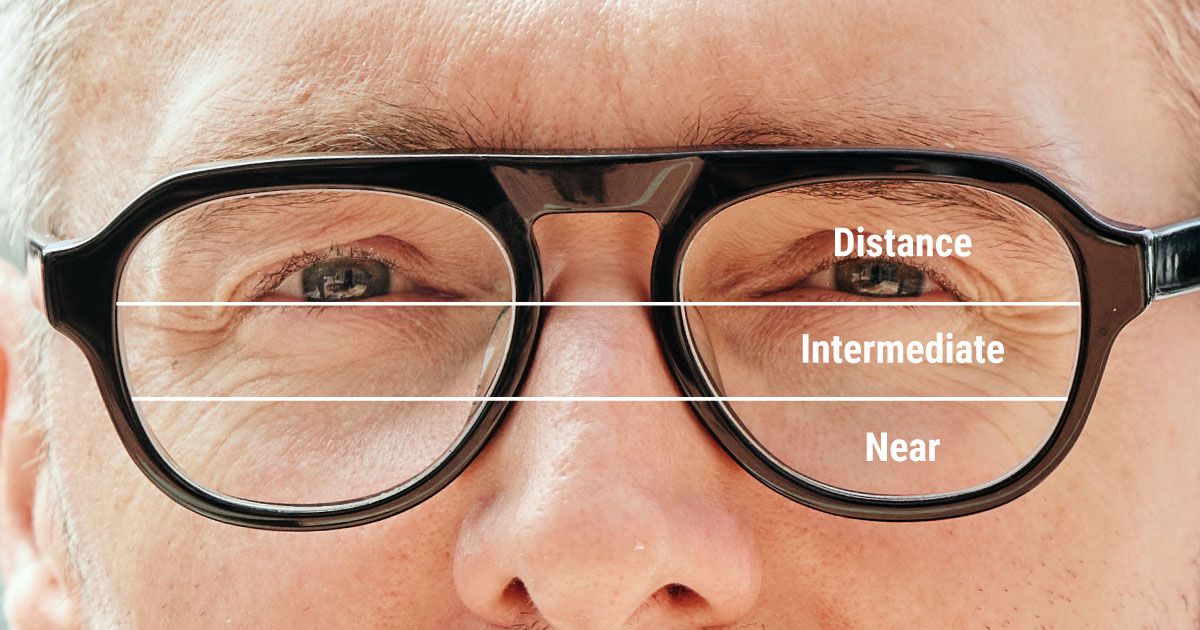
Clinical Note: The success of progressive lens adaptation often depends on the precision of the initial eye examination and the accurate fitting of the lenses. A skilled optician will take precise measurements, including pupillary distance and fitting height, to ensure the optical centers align correctly with the wearer's eyes.
Diagram showing vision zones in a progressive lens: distance, intermediate, and near

3. Progressive Lenses vs. Bifocals & Trifocals: A Clear Comparison

To fully appreciate progressive lenses, it's helpful to understand how they differ from their predecessors: bifocals and trifocals. While all three aim to correct presbyopia, their design and visual experience vary significantly.

FeatureProgressive LensesBifocal LensesTrifocal Lenses
AppearanceNo visible lines; seamless transitionVisible line separating distance and near visionTwo visible lines separating distance, intermediate, and near vision
Vision ZonesDistance, intermediate, and near (continuous)Distance and near (two distinct zones)Distance, intermediate, and near (three distinct zones)
TransitionSmooth, gradual change in powerAbrupt jump between distance and nearAbrupt jumps between all three zones
Intermediate VisionExcellent, natural vision for computer use, dashboard, etc.Limited or no intermediate visionDedicated intermediate zone, but with a visible line
AestheticsModern, youthful appearanceOlder, often associated with ageSimilar to bifocals, but with two lines
AdaptationRequires an adaptation period due to peripheral distortionGenerally easier to adapt to, but with image jumpEasier to adapt to than progressives, but with image jumps
Cost (Kenya)Generally higher due to advanced technology and customizationMore affordableMore affordable than progressives, but more than bifocals
Why Choose Progressive?

Progressive lenses offer a more natural and aesthetically pleasing solution for presbyopia. They eliminate the "image jump" associated with bifocals and provide clear vision at all distances, making them ideal for modern lifestyles that involve frequent switching between near, intermediate, and distance tasks.
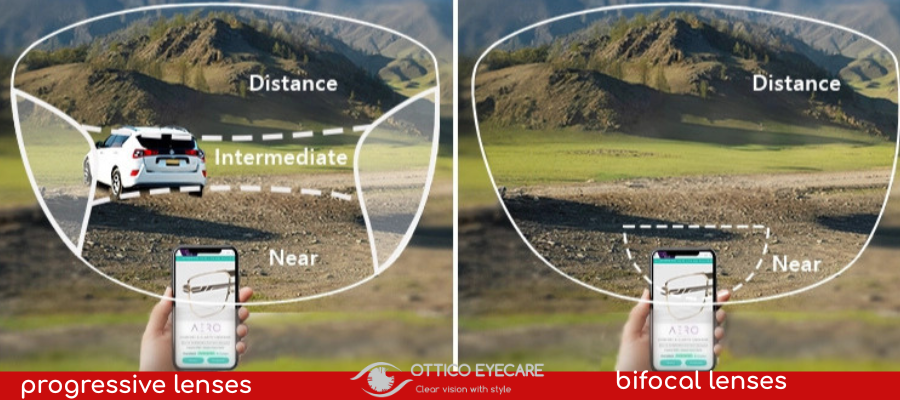
Visual comparison of bifocal lens with a visible line and progressive lens without a line

4. The Benefits of Progressive Lenses for Kenyans

For residents of Nairobi and its environs, including Gachie, Ruaka, Gigiri, Runda, Nyari, Kitisuru, Lavington, Tigoni, and Kiambu, progressive lenses offer numerous advantages tailored to the demands of modern life.

Seamless Vision for a Dynamic Lifestyle

Whether you're navigating the bustling streets of Nairobi, working on a computer in a Gigiri office, or reading a menu at a cafe in Lavington, progressive lenses provide clear vision without the need to constantly switch between different pairs of glasses. This seamless transition is particularly beneficial for professionals who require sharp vision at varying distances throughout the day.

Enhanced Aesthetics and Confidence

Progressive lenses eliminate the visible lines associated with bifocals, offering a more youthful and modern appearance. This aesthetic advantage can boost confidence and ensure your eyewear complements your personal style, whether you're attending a business meeting in Runda or enjoying a weekend outing in Tigoni.

Improved Posture and Comfort

With bifocals, wearers often have to tilt their heads awkwardly to find the correct focal point, leading to neck and shoulder strain. Progressive lenses allow for a more natural head posture, as the gradual change in power aligns with your natural eye movements. This ergonomic benefit is crucial for individuals who spend long hours reading or working on computers.

Protection Against Digital Eye Strain

Many progressive lenses available at Ottico Eyecare can be customized with digital blue block coatings. In today's digital age, where we are constantly exposed to screens, these coatings help filter out high-energy blue light, reducing digital eye strain, preventing headaches, and supporting a healthy circadian rhythm.

5. Adapting to Your New Progressive Lenses: Clinical Notes

While progressive lenses offer unparalleled visual benefits, they do require an adaptation period. Because the lens power changes gradually, there are areas of soft focus or peripheral distortion at the edges of the lenses. Your brain needs time to learn how to use the different zones effectively.

Clinical Advice for Faster Adaptation

1. Wear Them Consistently

The most crucial step in adapting to progressive lenses is to wear them consistently. Avoid switching back to your old glasses, as this will only prolong the adaptation process.

2. Point Your Nose, Not Just Your Eyes

When looking at objects, especially those in your peripheral vision, turn your head and point your nose towards the object rather than just moving your eyes. This ensures you are looking through the clear central corridor of the lens [3].

3. Adjust Your Chin for Reading

When reading or looking at close-up objects, lower your eyes and slightly raise your chin to look through the bottom portion of the lens.

4. Practice on Stairs

Navigating stairs can be tricky initially. When walking down stairs, tuck your chin slightly and look through the top (distance) portion of the lens to ensure clear vision of the steps.

5. Be Patient

Adaptation can take anywhere from a few days to a couple of weeks. If you experience persistent dizziness, headaches, or difficulty adapting after two weeks, consult your optician at Ottico Eyecare for a fit adjustment.

Data Chip: Adaptation Timeline
  • Days 1-3: Expect some mild dizziness or a "swimming" sensation, especially when moving your head quickly.
  • Days 4-7: The peripheral distortion should become less noticeable, and you'll start finding the correct focal zones more naturally.
  • Days 8-14: Most wearers fully adapt and enjoy seamless vision at all distances.
Person seamlessly viewing a book, computer, and distant object with progressive lenses

6. Progressive Lenses and Digital Life: Computer Use & Eye Strain

In the modern workplace, particularly in tech hubs like Nairobi, prolonged computer use is a reality for many. Progressive lenses are uniquely suited to address the visual demands of digital life.

The Intermediate Zone Advantage

Unlike bifocals, which lack an intermediate zone, progressive lenses provide a dedicated area for viewing objects at arm's length, such as a computer screen. This eliminates the need to lean in or tilt your head awkwardly, reducing the risk of computer vision syndrome, which includes symptoms like dry eyes, neck pain, and headaches.

Enhancing with Blue Block Technology

To further protect your eyes during digital tasks, Ottico Eyecare recommends pairing your progressive lenses with digital blue block coatings. These coatings filter out harmful blue light emitted by screens, reducing eye fatigue and improving visual comfort during long hours of work or study.

7. Choosing the Right Progressive Lenses in Kenya: What to Consider

When selecting progressive lenses in Kenya, several factors should influence your decision to ensure you get the best value and visual experience.

Lens Design and Technology

Progressive lenses come in various designs, from standard to premium digital free-form lenses. Digital free-form lenses offer wider fields of view, reduced peripheral distortion, and a more customized fit, making them the preferred choice for optimal visual comfort.

Frame Selection

The size and shape of your frame play a crucial role in the performance of progressive lenses. The frame must have sufficient vertical height to accommodate all three vision zones comfortably. The experienced opticians at Ottico Eyecare will guide you in selecting frames that are both stylish and functionally suitable for progressive lenses.

Lifestyle and Visual Needs

Consider your daily activities when choosing progressive lenses. If you spend significant time outdoors, photochromic progressive lenses, which darken in sunlight, offer convenient sun protection. If you drive frequently at night, anti-glare coatings can enhance safety and clarity.

Progressive Lenses Price in Kenya

The cost of progressive lenses in Kenya varies depending on the lens design, technology, and additional coatings. While they are generally more expensive than single-vision or bifocal lenses, the investment in seamless vision and enhanced comfort is well worth it. At Ottico Eyecare, we offer a range of progressive lens options to suit different budgets without compromising on quality.

8. Ottico Eyecare: Your Trusted Partner for Progressive Lenses in Kenya

Located conveniently at Westbay Mall along Redhill Road in Gachie, Kiambu, Ottico Eyecare is your premier destination for professional eye care and premium progressive lenses. We proudly serve patients from Ruaka, Gigiri, Runda, Nyari, Kitisuru, Lavington, Tigoni, and Nairobi.

Why Choose Ottico Eyecare?

Accurate Eye Examinations

Our comprehensive eye tests utilize modern diagnostic equipment to ensure precise prescriptions, which is critical for the success of progressive lenses.

Expert Fitting and Consultation

Our experienced opticians take precise measurements and provide personalized consultations to ensure your progressive lenses are perfectly fitted to your eyes and lifestyle.

Premium Lens Options

We offer a wide selection of high-quality progressive lenses, including digital free-form designs, blue block coatings, and photochromic options.

Patient-Focused Care

We prioritize your visual comfort and long-term eye health, taking the time to educate you on adaptation techniques and lens care.

Our Commitment to Clear Vision

At Ottico Eyecare, we believe that quality eye care should be accessible, transparent, and centered around your real visual needs. Every eye examination and eyewear recommendation is focused on accuracy, comfort, practicality, and long-term visual health.
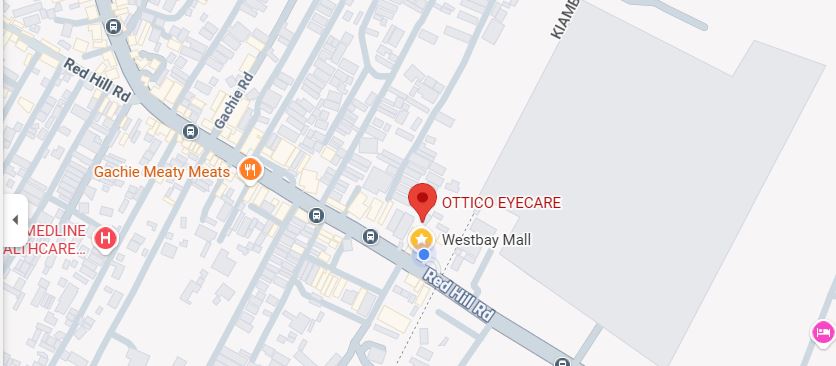
Map showing Ottico Eyecare clinic location in Gachie, serving Ruaka, Gigiri, and Runda

9. Frequently Asked Questions (FAQ) About Progressive Lenses

Q: What are progressive lenses and how do they work?

A: Progressive lenses, or multifocal lenses, provide a seamless transition between distance, intermediate, and near vision without visible lines. They work through a complex optical design that gradually changes the lens power from top to bottom.

Q: What is the difference between progressive, bifocal, and trifocal lenses?

A: Bifocals have two distinct zones (distance and near) separated by a visible line. Trifocals have three zones (distance, intermediate, near) separated by two lines. Progressive lenses offer a continuous, line-free transition between all three zones.

Q: How much do progressive lenses cost in Kenya?

A: The price varies based on the lens technology (standard vs. digital free-form) and added coatings (e.g., anti-glare, blue block). Contact Ottico Eyecare for a personalized quote based on your specific prescription and needs.

Q: How long does it take to adapt to progressive lenses?

A: Adaptation typically takes anywhere from a few days to two weeks. Consistent wear and following clinical advice, such as pointing your nose towards the object you're viewing, can significantly speed up the process.

Q: Are progressive lenses suitable for everyone?

A: While most people with presbyopia can successfully wear progressive lenses, some individuals with specific visual or balance issues may find adaptation challenging. A comprehensive eye exam at Ottico Eyecare will determine if they are the right choice for you.

Q: Can I use progressive lenses for computer work?

A: Yes, progressive lenses are excellent for computer work as they provide a dedicated intermediate zone for viewing screens at arm's length, reducing the need to lean in or tilt your head.

10. Conclusion: Embrace Seamless Vision with Ottico Eyecare

Progressive lenses represent a significant advancement in optical technology, offering a seamless, natural visual experience for individuals with presbyopia. By eliminating the visible lines and abrupt image jumps of traditional bifocals, they provide clear vision at all distances, enhancing both comfort and aesthetics.

If you're experiencing difficulty focusing on close-up objects or are tired of switching between different pairs of glasses, progressive lenses may be the ideal solution. At Ottico Eyecare, serving Gachie, Ruaka, Gigiri, Runda, Nyari, Kitisuru, Lavington, Tigoni, and Kiambu, our expert team is dedicated to providing accurate eye examinations, precise fittings, and premium progressive lens options tailored to your unique needs.

Don't let presbyopia limit your lifestyle. Experience the freedom of seamless vision with Ottico Eyecare.

Ready for clear, comfortable vision at all distances?

Book Your Eye Test Today
Satisfied customer leaving Ottico Eyecare with new progressive lenses in Kenya

© 2026 Ottico Eyecare. All rights reserved.